Tuesday, May 22, 2012

Henna Powder For Hair


Source
Are you looking for a toxic free hair dye? 


Do you have more than just a few grey hairs? 

Do you experience dryness from Henna? 

Then keep reading! 

The tradition of Ayurveda is a 5,000 year old system of holistic healing that originates from India. (9) My first introduction to Henna was through a good friend The HodgePodge Files. She highlighted the use of Cassia Obovata & Amla powder to condition & strengthen the hair; hence I decided to give it a try. I’m so thankful I did!

Over 2/3 months I’ve used Cassia, Amla and Shikakai powder treatment consistently and loved the results. These Ayurvedic Herb treatments cleanse, condition, and add shine to your hair. However, I will limit full treatments to once or twice a month only because it can be time consuming. 


What is Cassia Obovata?
Cassia obovata powder looks very much like henna powder, but generally does not stain hair or hands. It is an excellent conditioner, which makes hair glossy and thick, with a healthy scalp.  When you mix this green leaf powder with warm water (or green tea), it has a strong smell similar to a heap of warm mowed grass.  If your powder stains your hair or hands yellow, it probably has some rhubarb root mixed into it. (1)

Amla Powder:
Also known as Indian gooseberry, this fruit grows on the myrobalan-tree, native to India and Burma. It has the highest content of naturally occuring vitamin C and is used in a number of Ayurvedic medicines. It is a natural anti-oxidant, and in powder form is great for topical application to the hair and skin. (4)

According to Purdue University, Amla has medicinal properties capable of soothing sore eyes and relieving skin infections.  It also benefits the hair when applied as a conditioner. Dried amla fruit, ground into a fine powder, coats and nourishes the hair and scalp. A homemade amla powder mask can also add texture and volume to your hair. (2)(3)

Amla stops falling of hair and premature graying and strengthens hair roots. It removes dandruff and promotes long, lustrous healthy hair. Its benefits for hair cause it to be used in many herbal shampoos, oils and hair loss creams! (3)(4)


TIP: Do you have more than just a few grey hairs? Do you want to be free of toxic chemicals in permanent hair dyes? When mixing Henna substitute the boiled water with black coffee. It's apparently supposed to help loosen the red tones, especially where there is a large percentage of grey. It works! (7)


Acacia Concinna or Shikakai is a small shrub-like tree, which grows in the warm, dry plains of central India. For centuries the people who have had access to this tree have used its pod-like fruit to clean their hair. They collect, dry and grind this pod into a powder, which is considered a superior cleanser for lustrous long hair; and has been reported as "promoting hair growth and preventing dandruff." (5)

Because of these benefits, this powder was named "shikakai" which literally translates as "fruit for the hair". (5)

Typically, shikakai is mixed with water to make a paste, which is worked through the hair. It lathers moderately and cleans hair beautifully. It has a natural low pH, is extremely mild, and doesn't strip hair of natural oils. (5)

Usually no rinse or conditioner is used since Shikakai also acts as a detangler. This ancient product is probably the world's original pH balanced shampoo. (5)


TIP: Do you experience dryness from Henna? Add some honey to your mix! Hair oils such as Olive oil,  extra virgin Coconut oil, Argan oil, etc. to reduce dryness! (8)

I was so excited to try these treatments that I would mix all three together!  My new regimen involves a Cassia & Shikakai hair treatment and Amla powder treatment. I also add a TBSP of Amla powder or Cassia to my DC.

Basic Recipe: Mixing Cassia Obovata for healthy hair:
-Mix powder with warm or hot water  or green tea and let sit for 15-30 minutes. Make sure your mixture is like pancake batter.
-Apply the cassia paste onto clean hair that is either dry or damp. Apply mixture in layers starting from the back and moving forward.
-Wrap your hair in a plastic cap and leave on for at least an hour.
-Rinse or wash paste out. (6)

Using Organic Cassia Obovata for Conditioning Only (No Colour) 

To use Organic Cassia Obovata for conditioning, it is best to add a tablespoon or two of the powder premixed with water to your conditioning base, such as conditioner, flax seed gel, Light Greek yogurt or thick coconut milk, for example; or mix a sufficient amount of powder to cover your hair  with Greek yogurt or coconut milk for extra conditioning.  Let the paste sit for 10 minutes, then apply to freshly washed damp hair.  Wrap your hair up, relax for 30-40 minutes and rinse out in the shower very well to get all the particles out. (6)

My hair after Cassia/Amla Treatment

Always do a strand test. Apply a little amount to your inner arm and leave for an hour. Observe for 24 hours, if you experience rashes, itching and redness, do not use.

Storage:
How to store your powder: fridge or cool dark place.
How to store your cassia obovata and henna paste: freezer

Where to buy: 
Online: Henna Sooq
Stores in Toronto: Nharo! 543 Danforth Avenue 
Honey Fig  4967 Yonge Street, North York , ON M2N 5N6


Reference:

  1. “Cassia Obovata Also known as Neutral Henna or Senna.” hennaforhair.com. N.D. Web. 21 May 2012.
  2. Jewell Eleanor. “How To Use Amla Powder on Hair.” Livestron.com. 14 June. 2011. Web. 21 May 2012
  3. “Amla Powder – Ayurvedic Treatment for Hair, Skin and General health.” Mehndiskinart.com. N.D. Web. 21 May 2012
  4. “Amla Powder Amalaki/Indian Gooseberry/[Emblica Officinalis].” Favourfinesse.com. N.D. Web. 21 May 2012
  5. “Shikakai Powder.” Redrosehenna.com. N.D. Web. 21 May 2012
  6. LeBlanc, Vanessa. “Ayurvedic Herbs: Organic Cassia Obovata.” Hennablodspot.com. 21 March. 2012. Web. 21 May 2012
  7. Tricia. “The Secret of dying Grey Hair Naturally with Henna is…Coffee.” littleecofootprints.com.12 September. 2010. Web. 21 May 2012
  8. Henna Sooq face book page. May 15. 2012. Web. 21 May 2012
  9. "Ayurvedic Hair Care, tips for healthy hair." Indianhairoil.com. N.D. Web. 21 May 2012


Monday, April 16, 2012

Relax: Don't Do It!


How many times have you heard people say natural hair is difficult to manage? or “other people’s hair may grow, but mine won’t.” I’m tired of natural hair so I’ve decided to relax it."  "What’s the best way to permanently straighten my hair?"

There are so many questions about curly hair that need answers, but do not despair; thankfully, there is a wealth of information online, in books and on you tube to assist.

If you are on a journey to transition from relaxed hair to natural hair I want you to understand that growth will not happen overnight, but it will come. Furthermore, your hair will not reach its full potential until products full of petroleum, waxes and silicones are no longer clinging to your strands. Keeping hair in optimum condition during the growing-out phase is paramount, because you want your new growth to be healthy.(5) Coconut oil, Shea butter, Olive oil, Castor oil, Grape seed oil, Jojoba oil & Patience are key moisturizers during this phase.

I could give you a trillion reasons to go natural, but lets begin with ten!
  • According to Dr Oz & Cheryl Kramer Kaye hair Relaxers can be dangerous.  The active ingredient in most Drugstore Relaxers is Sodium Hydroxide; also know as Lye, and also the active ingredient in Drain Cleaners.  There are some No-Lye Relaxers, but these are similarly bad for you.  It is a marketing technique companies have been using to say their product is organic and uses “natural ingredients”, but Dr Oz says this makes him mad because there is no way to produce Lye that is organic. (3) Furthermore, a new study in the American Journal of Epidemiology has linked hair relaxers to uterine fibroids, as well as early puberty in young girls. (4)
  • Going curly means going green. The detergents (sulfates) in shampoo pollute our water; so living a sulfate-free life helps keep the earth’s water supply clean. Not using blow dryers and flat irons means you’re saving electricity. (5)
  • Your life no longer revolves around the weather. Curly hair loves moisture. (5)
  • The food and drug administration says, "Hair relaxers and hair dyes are among its top consumer complaint areas. Complaints range from hair breakage to symptoms warranting an emergency room visit". Also in February 1994, the FDA and American Cancer Society released an epidemiologic study involving 573,000 women. Researchers found that women who had never used permanent hair dyes showed decreased risk of all fatal cancers combined and of urinary system cancers. (2)
  • Once you learn how to care for your hair, it’ll be healthier than you ever imagined! (1)
  • Curls make you look younger! (5)
  • You’ll save the time and money you spent on hair appointments.
  • You never know when it might go wrong. Just like food, allergies show up over time, so do hair chemical allergies. What worked fine two years ago might cause a bald spot in two years. (2)
  • If it went wrong before, it will very likely happen again. If you had a bad reaction to a perm, do not do it again. Nine times out of 10, the chemicals are just as much to blame as the stylist. (2)
  • Learning to accept and love your curls means learning to accept and love yourself! (5)

At the outset natural curly hair may seem difficult to manage, but once you get the hang of it, it becomes easy.

For me the biggest challenge was finding a routine that worked! Once I did, I continued with it. 

Good luck!!! Feel free to share your experience(s) below.

Reference:

Ten Great Reasons to Go Natural. NappyMe. nappyme.wordpress.com. 11 August. 2011. Web. 11 April. 2012.

Hermitt, Andrea. M.A. Reasons for Black Women to Wear their natural hair. Voices.Yahoo.com.  21 June. 2006. Web. 11 April. 2012.

Dr Oz Fans. Dr Oz: Brazilian Blowout, Relaxers, & Hair Straighteners: What's Safe?. Drozfans.com. 8 December. 2010. Web. 30 March 2012.

Evans, Charlotte. New Study links Relaxers to Fibroids. Bet.com. 23 February. 2012. Web. 30 March 2012.
Massey, Lorraine and Bender, Michele. curly girl The Handbook. New York, 2010. Print.

Thursday, March 29, 2012

Giveaway Alert! Win Dudu Osun black soap


                                    Source


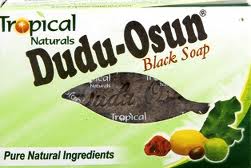
Shakara Natural Tips has hit 200 followers on FB, so as promised, we are doing another giveaway!   Win a 6 pack of  Dudu Osun (African black soap, handmade in Nigeria, value $30) by telling us:

When did you go natural and why?
Simply leave your comment below!


You are also allowed to have multiple entries to this giveaway by tweeting about the contest, posting it on Facebook, Digg, or other social bookmarking sites (be sure to tag Shakara)
1 lucky winner will be selected by random selection. This contest runs for 1 week, entry ends Wednesday April 4th 11:59PM

US & Canadian Residents Only

Sponsored by Nharo! Arts & Crafts Inc.

THIS CONTEST IS CLOSED.


The Winner for my latest giveaway is Nikki Stelly!
Our winner Nikki was selected through random.org! Congrats to Nikki for winning 6 bars of Dudu Osun black soap!!!! Please email your address to shakaranaturaltips@gmail.com

Wednesday, March 21, 2012

Itchy Scalp...Bald Patches?


I've  blogged about a hair spritz I use regularly here, but of late I’ve also been using another recipe, at least for the past 3-4 weeks. It has become a tried-and-tested favourite!

I stumbled upon this recipe after watching a video from Trulynaturallycoiled, so you can say she's the inspiration behind this! The very next day I was at the Big Carrot {health food store} shopping for Calendula!

For as long as I can remember my scalp has always itched, of late not so much... after watching the video, I did some research and this is what I made: Hibiscus & Calendula Tonic! Enjoy :)


Ancient woman of India used Hibiscus extracts as hair treatments. Both the leaves and flowers of the tree are included in Ayurvedic therapy, and used in cosmetic formulations. The flowers and leaves contain many properties that benefit hair and scalp, and help in the treatment of dandruff and hair loss.

Hibiscus has a soothing and cooling action on the scalp. It is beneficial to those who suffer from the scalp condition seborrhea because of its astringent properties which help to reduce oil-gland secretions and excessive oiliness in the hair and scalp. Hibiscus also helps to reduce scaling, itching, and redness, and reduces clogged pores, thereby improving overall hair health.
Calendula officinalis, or marigold, has been used for medicinal
 purposes for centuries. Calendula contains a high amount of falconoids, which are plant-based antioxidants that protect the body against cell-damaging free radicals.
Calendula has anti-inflammatory, antiviral, and antibacterial effects, and Calendula powdered extract soothes irritated scalp, and improves the condition of the scalp. 


Calendula flowers & Hibiscus leaves can be steeped in boiling water overnight, strained and then used directly on your scalp as a final rinse and left in your hair.

Source: Thomas – Banks, Laquita. “Flowers for your hair and scalp.” Cocoandcreme.com. November 10. 2011. Web. 20 February. 2012.

Recipe: Hibiscus & Calendula Hair Tonic
1 Quart of water
3 heaping tablespoons Organic Calendula whole flower
3 heaping tablespoons Organic Hibiscus flower (fair trade)
5 drops pure rosemary oil, tea tree oil, castor oil & vitamin e oil.

  1. Fill a large pot with water
  2. Cover the pot & bring the water to a boil on high heat, then turn the heat down to low and simmer for 1 hour to get rid of impurities. (Check regularly to make sure the water is not boiling away.
  3. Remove the water from the heat, add Calendula, hibiscus leaves & essential oils. Stir to blend.
  4. Replace lid and let the mixture steep to cool.
  5. Pour liquid into a glass jar and store in a cool place for up to 1 week before using.
  6. Strain leaves before putting into spay bottle to avoid clogging.


Happy spritzing!

Saturday, February 25, 2012

What is BLACK SOAP?


We’ve all been there before…you walk into a department store and head for the health and beauty section. You examine a wide variety of cleansing bars and you choose one that seems to match your needs. It usually takes a few tries before you find that one soap that really works for you. Do you ever stop to look at the ingredients of this soap?(2) 

You are likely to find triclosan, which can disrupt the thyroid hormone and increased exposure can contribute to the development of breast cancer. You will find fragrance, which is usually a safe word for phthalates, a chemical that can cause birth defects and liver damage. There are so many chemicals that are used in nearly all "cleansing bars" sold in stores today. (2)

I often use the words “never put anything on your skin your wouldn’t eat!”

Whatever soap or cosmetics you use are absorbed through your skin into your blood stream. Health first, beauty second.

So what makes African black soap different that even Dr. Oz applauds it:
Raw Ghana Black Soap
  1.        African Black Soap comes from plantain skin, which is a natural source of vitamins A & E & iron. (1)(3)
  2. It is made with rare tropical honeys & pure unrefined Shea butter.
  3.      It contains a high amount of glycerin, which absorbs moisture from the air and literally deposits it into the skin, making the skin soft and supple. (2)
  4.   African black soap is unique in that it contains no preservatives, color enhancers, or fragrances. (2)
  5. It helps to heal acne, eczema, shaving bumps and spots. (2) (3) (4)
  6.    African black soap creates a soft lather without the animal fat additives that are commonly used in soaps made in the US/Canada. (2) Read more here


How Black Soap is Made: 
First, leaves and bark of various trees and plants are burned in a vat or kettle. These may be leaves from banana trees, plantain skins, palm tree leaves, Shea tree bark, and/or cocoa pods. 
Secondly, water is added to ashes to be filtered. Oils such as coconut oil, Shea oil, palm oil, palm kernel oil, and cocoa butter are added to the water to create the soap. 
The soap is then hand-stirred by local women for at least a day and then set out to cure for about two weeks.(2) (4)


The methods of making traditional black soap and its secrets have been passed down from generation to generation to keep the soap close to Mother Nature and avoid exploitation & imitations. Many have tried to create their version of black soap with all kinds of ingredients, but Ghanaian & Nigerian black soap are the best quality because they are ORIGINAL. (1) The most common form of  black soap which comes from the Yoruba people of Nigeria, Togo, and Benin republic is called Ose Dudu (Dudu Osun). Ose Dudu literally means Soap (ose) and Black (dudu).


If it ain’t broke don’t fix it!

There is no such thing as traditional liquid black soap. If you encounter liquid black soap bear in mind it is not traditional. There are liquid black soaps on the market made from natural ingredients. Do not confuse these with traditional black soap. Liquid black soap is new to the market and an extension of traditional black soap. If you are into natural products, you should ask your vendor what the ingredients are in their liquid black soap. (3)


DIY LIQUID BLACK SOAP
For a liquid black soap, fill a container with the soft African Black Soap; crumbled or broken into smaller, more easily dissolved pieces. Add 20% purified or distilled water; again, that's 2 parts water to 8 parts black soap. Seal the container and set aside for several hours. This makes an excellent shampoo or shower gel. (2)


African Black Soap contains a whopping 48% unrefined Shea butter! The commercial soaps and lotions only add 1% to 4% ultra refined, which is too little Shea and it has the healing properties removed; it most likely was refined using a chemical process that leaves trace chemicals in the Shea butter. The average homemade Shea soap can only handle 10% Shea butter. How will I know the difference? Oh, you'll know! African Black Soap is made using a natural lye saponification with no preservatives added or needed. (2)


Where to buy Black Soap? Nharo Fair trade arts & crafts Inc. 

Warning: The FAKE SOAP is hard, black and does not even compare to the original. Real Black Soap is always brownish-black. The longer the plantain skins are roasted the darker the soap. But the soap is never completely black & it is not scented. (3)


References:
  1. Dr. Oz Fans. “Dr. Oz: Acerola Cherry, Frankincense oil & Africa Black Soap.”. Drozfans.com. February 14. 2012. Web. 24 February. 2012.
  2. Mad hatters Wholesale. “African Black Soap.” Sheanmore.com. 03 April. 2012. Web. 23 February. 2012.
  3. “A Brief History of Black Soap, Alata Samina or Anago Samina.” www.sheabutterr.com. N.D. Web. 22nd February. 2012.
  4. “African Organic Black Soap.” organicblacksoap.com. N.D. Web. 23 February. 2012.


Do not copy©shakara-naturaltips.blogspot.com

Thursday, February 16, 2012

What is Rhassoul Clay?


“Consumers have real power they are not exercising, we need to let cosmetic companies know we’re not going to buy their products unless they make a strong unwavering commitment to safety.” Janet Nudelman, Safe Cosmetics Campaign. (1)


My job enables me to work with women-owned co-operatives and female producers in Africa.

Recently I received a sample of 100% pure [chemical free] Rhassoul clay from Morocco. 

More times than I can count, I've watched many of our customers buy Rhassoul for skin care purposes...but what I've found very intriguing is when some buy it solely to Shampoo with!

So, I decided to give it a try...

Personally, I believe that nature has given us everything. But marketing and advertising convinces us otherwise.


What is Rhassoul clay?
Rhassoul comes from the Arabic word "rassala" meaning "washing’’. It is found deep beneath the Atlas Mountains of Morocco. This clay is probably one of the most perfect clays in the world, because it is ideal for all skin care and dermatological uses. (3)
Rhassoul has been used for over 1400 years by nobles in ancient Rome and Egypt as a soap, shampoo and skin conditioner. It has an outstanding ability to cleanse, nourish and condition the skin and hair. (3)

Properties of Rhassoul clay?
Easy to use Rhassoul is 100% natural and ecological.
It contains higher percentages of silica, magnesium, potassium, calcium and other trace minerals than other clays. These minerals make the clay highly detoxifying as they can actually exchange themselves for toxic compounds like metals in the skin. The clay not only works to remove impurities from your skin, it also replaces them with nourishing trace minerals. The clay's high level of ions exchange makes it ideal for toning and enriching the skin. Perhaps the best part about Rhassoul clay is what it doesn't contain! No petrochemical derivatives, no synthetic preservatives, no surfactants or artificial colors ... all of which are common in commercial soaps and cleansers.(3)

Uses of Rhassoul clay?
Rhassoul clay may also help to improve the appearance of skin troubled by eczema, psoriasis, acne and rosacea. In addition, it helps with dandruff and thinning hair. (2)(3)

Using Rhassoul Clay as Shampoo?
The amount of Rhassoul clay you use will depend on the length and thickness of your hair. 

  • With a non-metallic bowl and spoon mix the clay with warm water or rose water to obtain a smooth creamy paste let the mixture hydrate for 5 to 10 minutes.(3)
  • Wet your hair and divide it into 4 sections. Curly hair is delicate and can be oversensitive to rough handling so apply clay gently.
  • Leave it in your hair for about 15 – 20 minutes. 
  • Rinse your hair thoroughly with cool water, then condition and style.

The results are fantastic! Rhassoul removes build-up and leaves your hair clean, and moisturized!


Hint:
I conditioned with Carina’s Certified Organic Daily light conditioner {I left it in my hair for approximately 1 hour} and then rinsed off with apple cider vinegar.

CARINA'S INGREDIENTS: Aqua, Cocos nucifera (coconut) oil, Pinus divaricata (pine) extract, Pinus banksiana (pine) extract, Chamomilla recutita (matricaria) flower extract, Urtica dioca (nettle) leaf extract, Taraxacum officinale (dandelion) leaf extract, Trifolium pretense (clover) flower extract, Citrus Tangerina (Tangerine) Oil, Pyrus malus (green apple) extract, Ananas sativus (pineapple) extract, Olea europaea (olive) fruit oil, Linum Usitatissimum (Linseed) Seed Oil, Curcurbita pepo (pumpkin) seed oil, Helianthus Annuus (Sunflower) Seed Oil, Persea Gratissima (Avocado) Oil, Beeswax.(4)
Ingredients in Latin & Scientific names. English translation in brackets.

Store your clay in the fridge or cool dark place. 
(3)
How to store your mud: in airtight non-metallic container in the fridge for up to one week. (3)
Where to buy Rhassoul clay? Nharo Fair trade arts & crafts Inc. $9.50 (165g)


Your thoughts?


Sources
  1. Ephraim, Rebecca. The Ugly Side of Pretty. Safecosmetics.org.  Dragon Fly Media. 1 February 2005. Web. 16 February. 2012
  2. DIY Beauty: Rhassoul clay facial cleanser. VivaWoman.net. 3 December 2008. Web. 16 February. 2012.
  3. Rhassoul Clay. Arganoiltree.com. n.d. Web. 16 February. 2012
  4. Nature’s blend with certified orgnaics. Carinaorganics.com. n.d. Web. 16 February. 2012
  5. Images:alifedeliberate;  
Do not copy©shakara-naturaltips.blogspot.com

Sunday, February 5, 2012

Moroccan oil review: SILICONE alert!


Have you ever wondered why silicone is bad for your hair? Read this article slowly & carefully, it may answer some of your questions.

What is silicone? Silicones are synthetic polymers.

In layman’s terms: synthetic polymers are derived from petroleum oil and made by scientists and engineers. 1

The word POLYMER is a more technical term for plastic! 2

Which brings me back, again, to the same question: “Why would anyone want to put petroleum oil or plastic on their hair or skin?”

The first 3 ingredients in Moroccan oil are silicones. 

Below is a break down of Moroccan oil’s ingredients in comparison to Moroccan Argan oil [100% Pure]


          Moroccan Oil             vs        100% Pure Argan Oil

Cyclopentasiloxane: While silicones plastic such as cyclopentasiloxane do not appear to have adverse effects on the human body, there are many concerns regarding the harmful effects it may have on the environment. For this reason, many countries like Canada have requested the silicone industry to provide more information and scientific data regarding its safety. 
Cyclopentasiloxane may cause mild skin and eye irritation, according to the ingredient's material safety data sheet. Also a small percentage of it reaches systemic circulation through dermal absorption, as found in a study by the Department of Environmental and Radiological Health Sciences. 4

Dimethicone is a  silicone derived emollient. Silicone emollient is occlusive - meaning they do not allow the skin to breathe (much like plastic wrap would do.) Recent studies have indicated that prolonged exposure of the skin to sweat, by occlusion, causes skin irritation. Some synthetic emollients are known tumour promoters and accumulate in the liver and lymph nodes. They are also non-biodegradable, causing negative environmental impact.
  1. Dimethicone
  2. Dimethicone Copolyol
  3. Cyclomethicone
Silicone was and still is used as breast implants. Tens of thousands of women with breast implants have complained of debilitating symptoms. Anecdotal evidence indicates silicone to be toxic to the human body. For more detailed information on the dangers of silicone simply key "silicone toxicity" into the Google search engine. 3

Butylphenyl methylpropional: is a synthetic fragrance
. Adverse effects – Skin irritant, sensitiser. In animals, skin applications at high concentrations caused sperm damage and central nervous system effects such as drowsiness and breathing difficulties. 5

Argania spinoza kernel oil: Argan oil (however there is no indication as to whether it is cold pressed or chemically extracted. If it is chemically processed there is a high probability that most of its unique properties have been lost).

Linseed extract, comes from the seed of flax plants, it is a mucilage emollient that is soothing to skin. 9

Fragrance supplement: limited information.

D&C Yellow-11, Color safe for external use only, is however not approved for use around eyes, or in eye products. 6

D&C Red-17 (CI 26100) characterized as a possible carcinogen. 11

Coumarin formerly the active ingredient in rat poison. A carcinogenic ingredient used in the manufacturing of deodorants, shampoos, skin fresheners and perfumes, and found here. 6

Benzyl benzoate has been shown to irritate the skin with some individuals, and should be avoided by those with a perfume allergy. The International Fragrance Association (IFRA) has restricted the use Benzyl Benzoate in fragrances because of the potential dermal sensitization. In Europe, it is listed as an "allergenic" substance and the European Cosmetics Directive requires OTC leave-on products to indicate its presence, even at concentrations of .001%. 7

Alpha-isomethyl ionone the International Fragrance Association (IFRA) banned this ingredient from being mixed into fragrance products (i.e. perfume, cologne). But you can still find this ingredient in a variety of other cosmetics that are not categorized as a “fragrance." 8


Often referred to as “liquid gold,” argan oil has long been valued in Morocco for its cosmetic and medicinal benefits. Extremely rich in vitamin E, antioxidant-packed argan oil has also been prominent in European skincare products for centuries, after its first appearance in Amsterdam in 1711. 10

Produced from the kernels of a rare and ancient tree, argan oil is all natural and completely organic. With cold-press extraction, the argan kernel yields a lightweight oil that absorbs much more quickly and yet is far less greasy than other oils, including olive oil. That fast rate of absorbency coupled with argan oil’s store of moisturizing essential fatty acids and anti-aging carotenes make it ideal for cosmetic purposes, as it quickly softens skin and reduces the fine lines of aging without clogging pores. 10

100% Pure Argan Oil Is Natural, Non Toxic and a superfood for your skin, hair & nails! 10


Are you in need of a silicon hair detox?

  • We recommend switching to silicone free brands to wash, condition & moisturize your hair!
  • Try making your own recipes…
  • Choose 100% Pure Moroccan Argan oil [it's a natural alternative].


Your thoughts?


References:
  1. “What is the definition of synthetic polymer.” Plastics 240. ToolingU.com. N.D. Web. 04 February. 2012.
  2. “Natural vs. Synthetic Polymers.” Carnegie Mellon University. http://gelfand.web.cmu.edu. 2009. Web. 04 February. 2012.
  3. “Chemicals in Cosmetics – Toxic Ingredients in Skin Care Products.” www.health-report.co.uk. N.D. Web. 26 January. 2012.
  4. Cyclopentasiloxane. Truthinaging.com.  1 January. 2006. Web. 26 January. 2012.
  5. “Understanding Skin care and cosmetic labels.” Aromamuse.com. 10 February. 2010. Web. 26 January. 2012.
  6. “List of More Widely Known Dangerous Ingredients in Body & Food  Products.” Pure Zing…for a better lifestyle, n.d. Web. 26 January. 2012.
  7. Benzyl benzoate. Truthinaging.com.  1 January. 2006. Web. 26 January. 2012.
  8. Alpha-isomethyl ionone. Truthinaging.com.  1 January. 2006. Web. 26 January. 2012.
  9. Kirchheimer, Sara. “Moroccan Oil Ingredients.” Livestrong.com. 21 November. 2011. Web. 26 January. 2012.
  10. “Rediscover the Beauty of Your Youth With Anti-Aging, All-Natural Argan Oil for Beautiful Skin, Hair, and Nails.” Arganoiladvisor.com. N.D. Web. 27 January. 2012
  11. Platzek, Thomas. Kraetke, Renate. “Risk assessment of colourants used in cosmetics in the E.U.”  Federal institute for Risk Assesment Berlin, Germany. D-14191. Household & Personal Care Today.  April 2009. Web. 19 January. 2012.
(c) Shakara Natural Tips 2012