Showing posts with label Dudu Osun. Show all posts

Saturday, February 25, 2012

What is BLACK SOAP?


We’ve all been there before…you walk into a department store and head for the health and beauty section. You examine a wide variety of cleansing bars and you choose one that seems to match your needs. It usually takes a few tries before you find that one soap that really works for you. Do you ever stop to look at the ingredients of this soap?(2) 

You are likely to find triclosan, which can disrupt the thyroid hormone and increased exposure can contribute to the development of breast cancer. You will find fragrance, which is usually a safe word for phthalates, a chemical that can cause birth defects and liver damage. There are so many chemicals that are used in nearly all "cleansing bars" sold in stores today. (2)

I often use the words “never put anything on your skin your wouldn’t eat!”

Whatever soap or cosmetics you use are absorbed through your skin into your blood stream. Health first, beauty second.

So what makes African black soap different that even Dr. Oz applauds it:
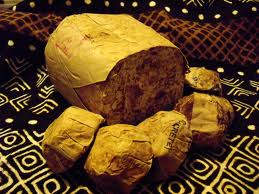
Raw Ghana Black Soap
  1.        African Black Soap comes from plantain skin, which is a natural source of vitamins A & E & iron. (1)(3)
  2. It is made with rare tropical honeys & pure unrefined Shea butter.
  3.      It contains a high amount of glycerin, which absorbs moisture from the air and literally deposits it into the skin, making the skin soft and supple. (2)
  4.   African black soap is unique in that it contains no preservatives, color enhancers, or fragrances. (2)
  5. It helps to heal acne, eczema, shaving bumps and spots. (2) (3) (4)
  6.    African black soap creates a soft lather without the animal fat additives that are commonly used in soaps made in the US/Canada. (2) Read more here


How Black Soap is Made
First, leaves and bark of various trees and plants are burned in a vat or kettle. These may be leaves from banana trees, plantain skins, palm tree leaves, Shea tree bark, and/or cocoa pods. 
Secondly, water is added to ashes to be filtered. Oils such as coconut oil, Shea oil, palm oil, palm kernel oil, and cocoa butter are added to the water to create the soap. 
The soap is then hand-stirred by local women for at least a day and then set out to cure for about two weeks.(2) (4)


The methods of making traditional black soap and its secrets have been passed down from generation to generation to keep the soap close to Mother Nature and avoid exploitation & imitations. Many have tried to create their version of black soap with all kinds of ingredients, but Ghanaian & Nigerian black soap are the best quality because they are ORIGINAL. (1) The most common form of  black soap which comes from the Yoruba people of Nigeria, Togo, and Benin republic is called Ose Dudu (Dudu Osun). Ose Dudu literally means Soap (ose) and Black (dudu).


If it ain’t broke don’t fix it!

There is no such thing as traditional liquid black soap. If you encounter liquid black soap bear in mind it is not traditional. There are liquid black soaps on the market made from natural ingredients. Do not confuse these with traditional black soap. Liquid black soap is new to the market and an extension of traditional black soap. If you are into natural products, you should ask your vendor what the ingredients are in their liquid black soap. (3)


DIY LIQUID BLACK SOAP
For a liquid black soap, fill a container with the soft African Black Soap; crumbled or broken into smaller, more easily dissolved pieces. Add 20% purified or distilled water; again, that's 2 parts water to 8 parts black soap. Seal the container and set aside for several hours. This makes an excellent shampoo or shower gel. (2)


African Black Soap contains a whopping 48% unrefined Shea butter! The commercial soaps and lotions only add 1% to 4% ultra refined, which is too little Shea and it has the healing properties removed; it most likely was refined using a chemical process that leaves trace chemicals in the Shea butter. The average homemade Shea soap can only handle 10% Shea butter. How will I know the difference? Oh, you'll know! African Black Soap is made using a natural lye saponification with no preservatives added or needed. (2)


Where to buy Black Soap? Nharo Fair trade arts & crafts Inc

Warning: The FAKE SOAP is hard, black and does not even compare to the original. Real Black Soap is always brownish-black. The longer the plantain skins are roasted the darker the soap. But the soap is never completely black & it is not scented. (3)


References:
  1. Dr. Oz Fans. “Dr. Oz: Acerola Cherry, Frankincense oil & Africa Black Soap.”. Drozfans.com. February 14. 2012. Web. 24 February. 2012.
  2. Mad hatters Wholesale. “African Black Soap.” Sheanmore.com. 03 April. 2012. Web. 23 February. 2012.
  3. “A Brief History of Black Soap, Alata Samina or Anago Samina.” www.sheabutterr.com. N.D. Web. 22nd February. 2012.
  4. “African Organic Black Soap.” organicblacksoap.com. N.D. Web. 23 February. 2012.


Do not copy©shakara-naturaltips.blogspot.com

Tuesday, December 27, 2011

Shampoo. Absolutely not!


Now your reaction might be: “you don’t shampoo! Now that’s just gross!”

I’ve always believed that if we knew half the truth about a lot of cosmetics we buy, it would undoubtedly change our outlook.

Recently Johnson & Johnson were in the news for having “chemicals of concern” [human carcinogens] in their iconic baby shampoo. While all the focus is on their baby shampoo nothing is being said about their Aveeno and Neutrogena brands, which still contain harmful toxins. The company came out with a statement promising consumers that it would be removing quaternium -15 and other formaldehyde – releasing preservatives from all of its baby products worldwide within 2 years. http://tinyurl.com/3guhv3r

Personally I think 2 years is a while.

Five months ago, I made a decision to stop using shampoos. It came like a brainwave. In the old days our grandparents and their parents before them did not use shampoos, they used soap, so why the shift?
In a few words, our water became hard, which made using soap increasingly difficult; so shampoos were invented.

Shampoos are detergents; while they are very effective they are a lot harsher, striping one’s hair of its natural oils. Conditioners - made up of artificial oils - were developed to mask this damage. After doing some research on this issue I’ve simply eliminated shampoos altogether.

My routine involves using the following:

Dudu Osun or “Ose Dudu” [as we call it back home in Lagos, Nigeria] is an age long black soap made by hand, using only pure natural ingredients. I often say all of its ingredients you can pronounce!!
The soap is made using pure Honey, Shea butter, Osun (Camwood extract), Palm kernel oil, Cocoa pod ash, Palm bunch ash, Aloe Vera, Lime juice, Water and fragrance. It contains no artificial colours or preservatives and is biodegradable.
I find that it has a deep cleansing effect; I’ve also used it in treating acne and dark spots.

Raw Ghana Black soap is more organic than Dudu Osun. It has NO fragrance. If you’ve ever tried to buy this soap you’ll see that it’s not fancy at all!

It is handmade by local women in Ghana using Plantain skins, Shea butter, native Honey, virgin Coconut oil, cocoa pod ash and Palm kernel oil. Its benefits are immeasurable.


Neither soaps have alcohol or petroleum-by-products, and they lather really well!
Rule of thumb: If you can’t eat it, don’t put it on your skin.

Recently Dr. Bonner’s Magic Soap has become one of my favourite substitutes for shampoo. It’s made with Fairtrade certified & organic oils. I’m a huge fan of the peppermint liquid soap!
Dr. Bonner’s Magic Soaps contains olive oil, hemp seed oil, jojoba oil, coconut oil, and peppermint oil. You can purchase this at any health food store or online. http://www.drbronner.com


Baking soda: I’ve discovered you can use it for pretty much anything! Its environmentally friendly, in-expensive and can be bought anywhere!
What to do?
Mix 1 Tbsp of baking soda with 8 oz of lukewarm water and wash your hair.
At first it might seem weird because baking soda neither lathers nor has a scent, but it’s a healthy alternative that works rather well. It will remove odor plus any build up from oil and dirt, leaving you and your hair feeling fresh.

Lastly, condition only. This may seem radical, but the results are incredible.
The process?
Wet your hair first, and then gently massage conditioner into your scalp and hair. You will have to work at it to remove dirt and oil build up, then rinse out with lukewarm water. I recommend you do this twice.

The third time you apply your conditioner let it sit for a few minutes, then rinse out with cold water, to seal your pores. This final step is necessary because it gives your hair a healthy sheen.

Conditioners I’m currently using:
Carina's Organics & Uncle Funky’s Daughter Richee Rich Moisturizing Conditioner. It’s free of Mineral oil, Paraben and Synthetic Dyes.